MiGs, Stars & Magic Books: A Brief History of Trespassing in Moscow
An illustrated guide to urban exploration in the Russian capital.
Thursday 1 June 2017
The Cold War may be over, but many of its relics still remain…. some more visibly than others. In one particular Bulgarian city, beneath a boulevard lined in modern shops, Western brands and trendy street-side cafes, this abandoned bomb shelter remains largely intact: a forgotten remnant of the past, lurking only a few metres beneath the modern metropolis.
I had known about the hatch for months – sat in the grassy island at the middle of a road junction, a couple of rusted plate doors set into a concrete base and fastened with a padlock. The kind of thing you could walk by a hundred times without ever noticing it. And every day, hundreds of people do.
That hatch was big, though. Big enough that I couldn’t stop wondering what was hidden beneath it. I had known about it for months… but it wasn’t until a week ago, when I passed by the place and found the padlock missing, that I decided it was time to go and find out. I waited for the perfect opportunity – then last night I was giving a tour to two visiting photographers, and the chance arrived.
We got there at maybe 3am; and as per the terms of Murphy’s Law, two road workers were stood just a few feet from the hatch, painting new lines over a pedestrian crossing. So we lingered. We lurked nearby, pretended to look at our phones, while the men in their high-vis jackets, with their flashing orange service van, finished up their work and eventually drove away.
In retrospect, Friday night might not have been the best time for this. Every minute or two, someone would pass: a taxi heading from the nightclubs back to the suburbs; a lone drunk, stumbling by with kebab in hand; a gaggle of girls in high heels and higher spirits. We were going to have to be fast.
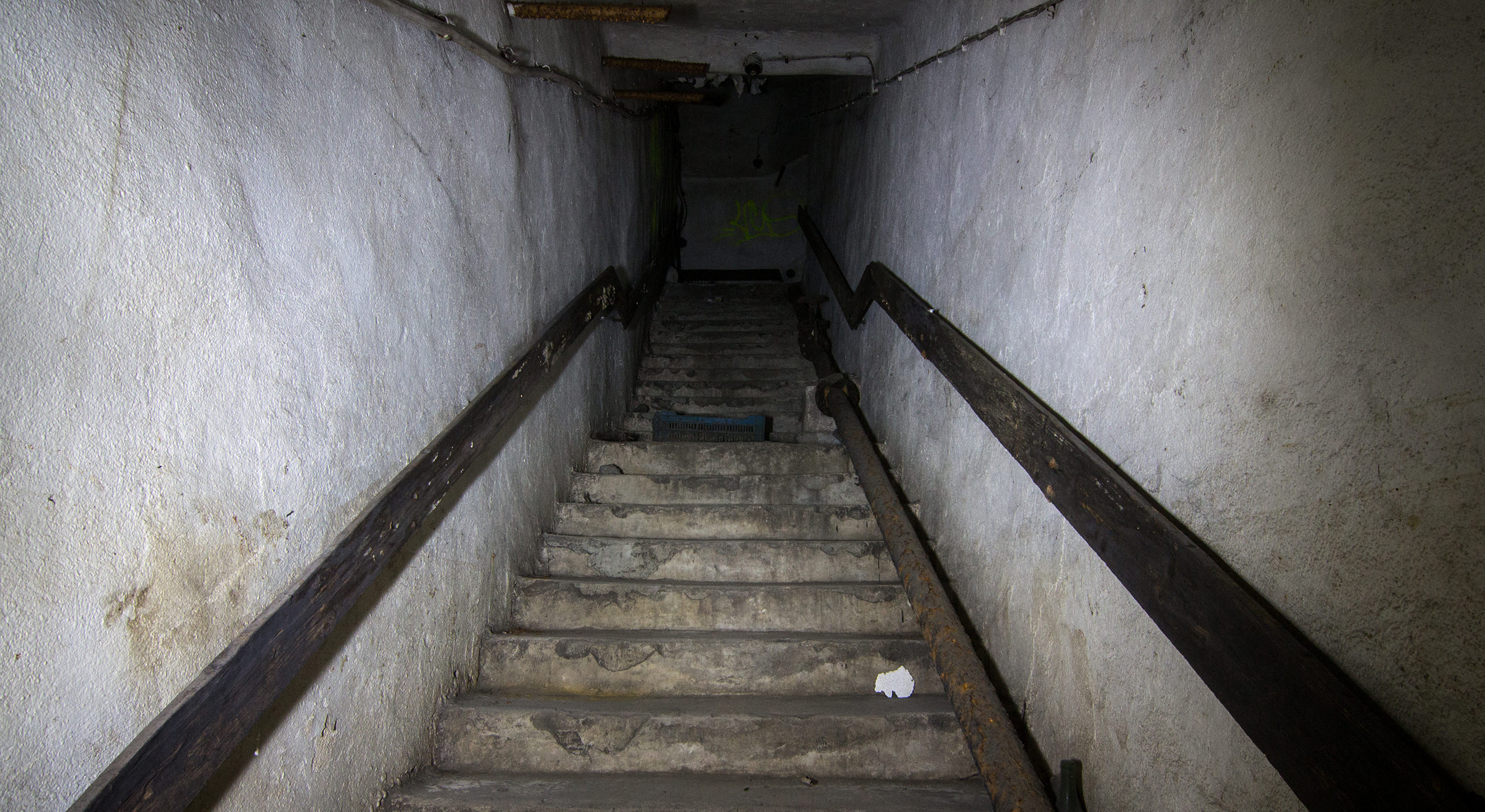
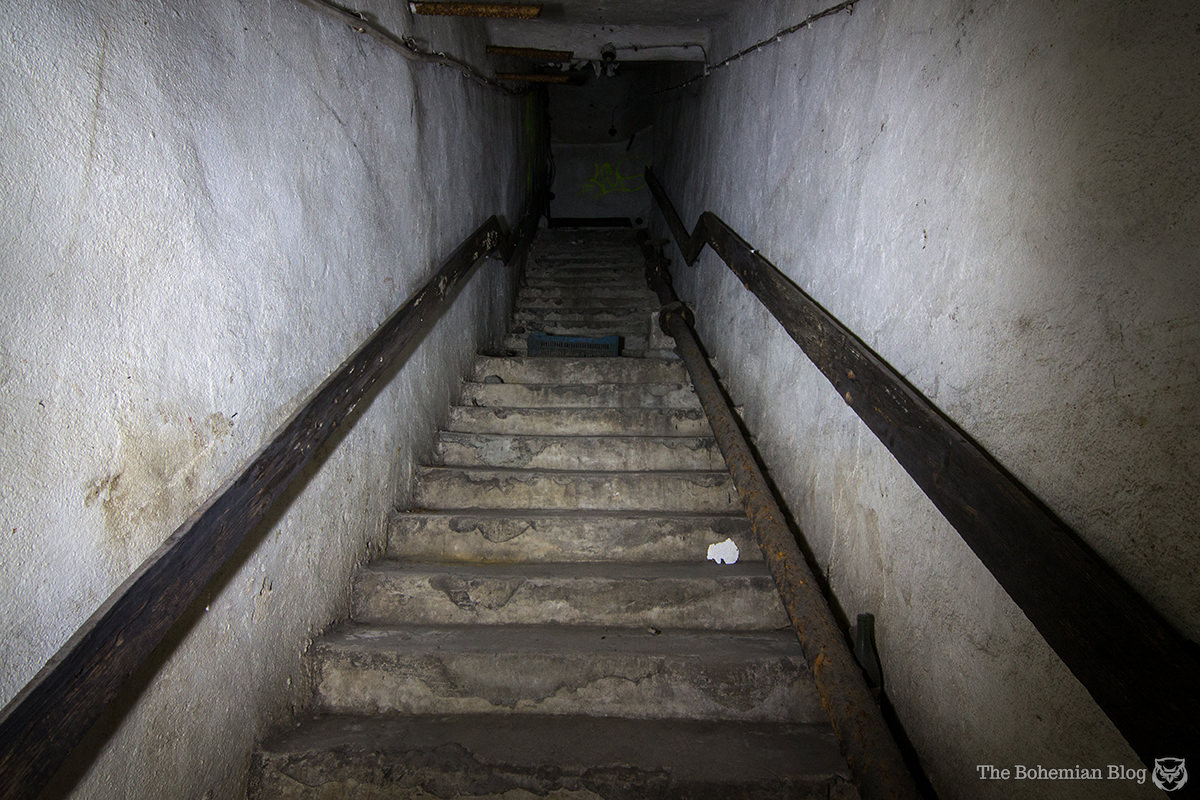
The hatch opened with a noisy groan of protest, much louder than I’d hoped – but it was too late now, and we were going in blind. Streetlight fell through the open hatch to reveal a set of wide concrete steps beneath the metal lid. Down they went, beneath the street, then turned at the end of the shaft and folded out of site. One, two, three of us stepped quickly across the threshold and let the hatch down gently over our heads.
We were in.
Before this point, I hadn’t known what we would find. That hatch was so big it could only have been designed to allow people to pass through; I had guessed a sewer main, or an entrance to storm drains allowing maintenance workers access. But I would soon be proven wrong.
After the first flight of steps, the passage turned 90 degrees and went down another. This place had been much smarter once, nicer than any drain needs to be – flaking white paint on the walls, rotten wood handrails down the sides. At the bottom it reached a corridor set with a series of bulkhead doors. These thick metal doors featured pressurised locks, rusted gears and wheels that suggested some kind of security purpose.
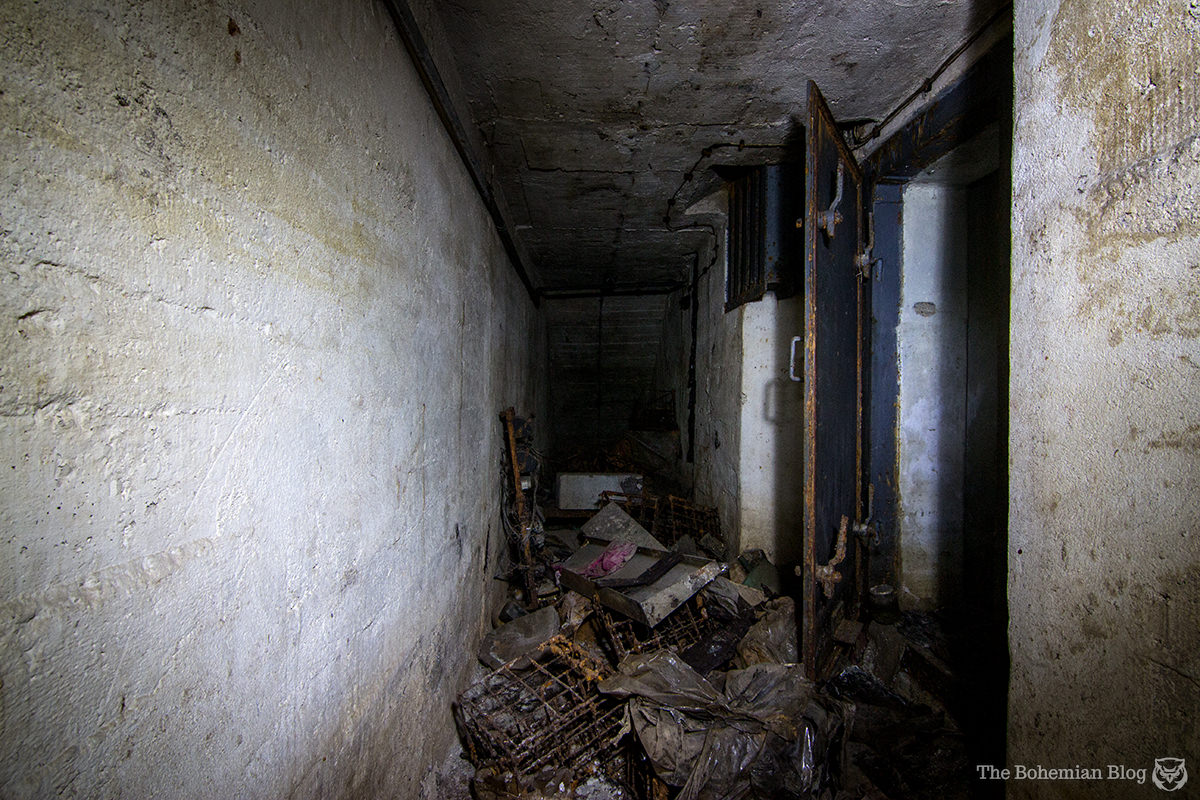
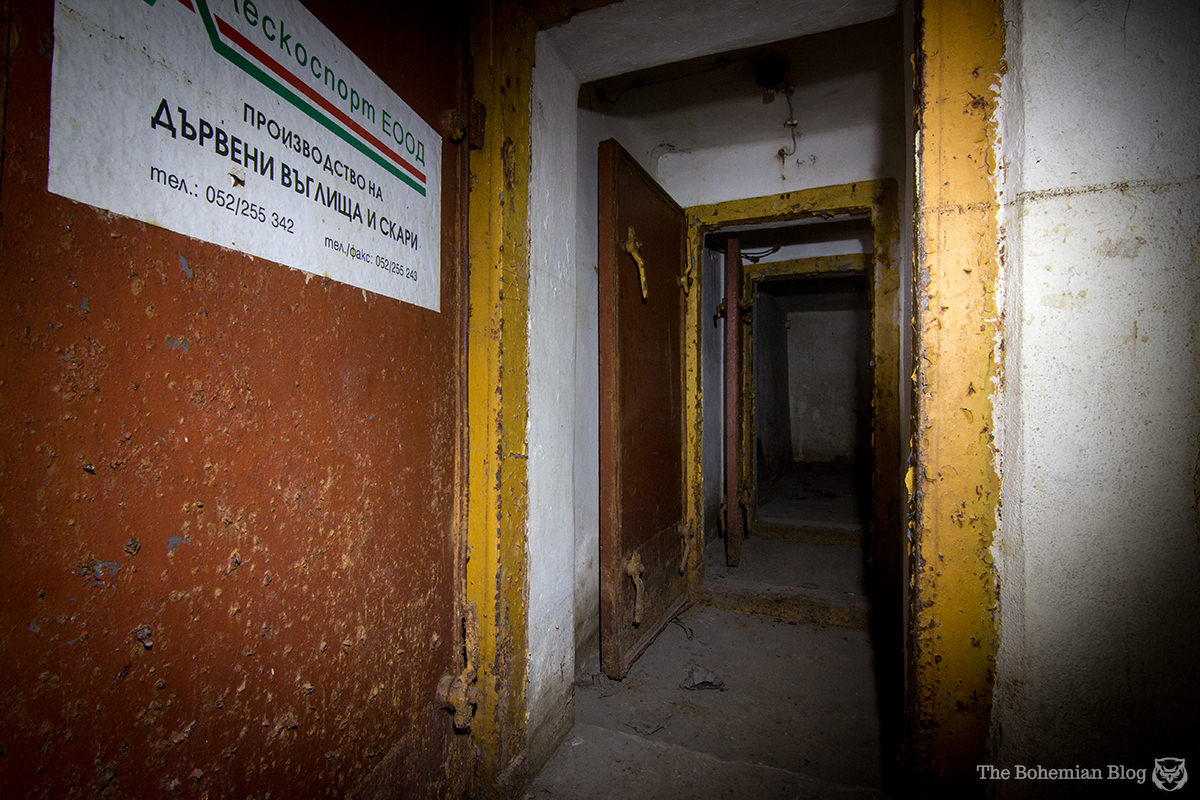
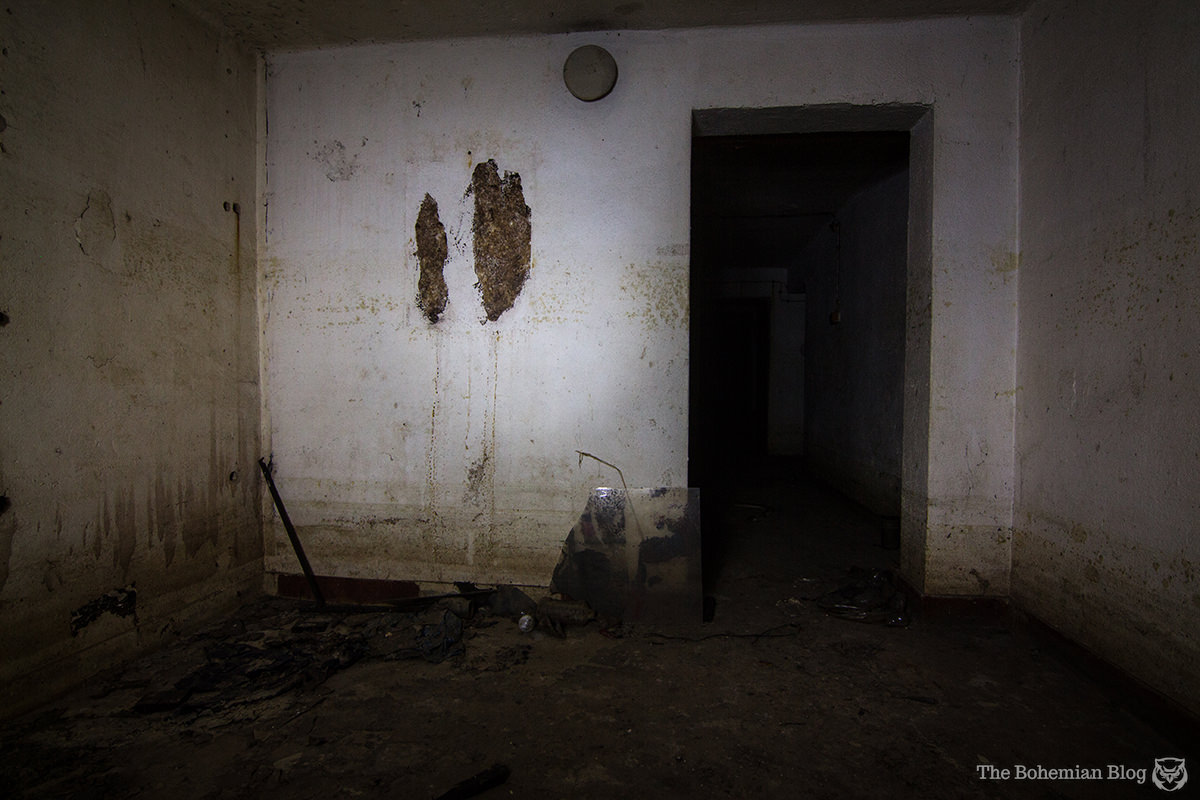
Immediately I recognised this place as an abandoned bomb shelter. Bulgaria has plenty of them – in fact, one of the first stories on this blog was about a similar place. Whereas that other bunker had been stripped bare however, no more than concrete tunnels and graffiti, this one was quite different. Undamaged, unlooted, a place where only time itself had left a mark.
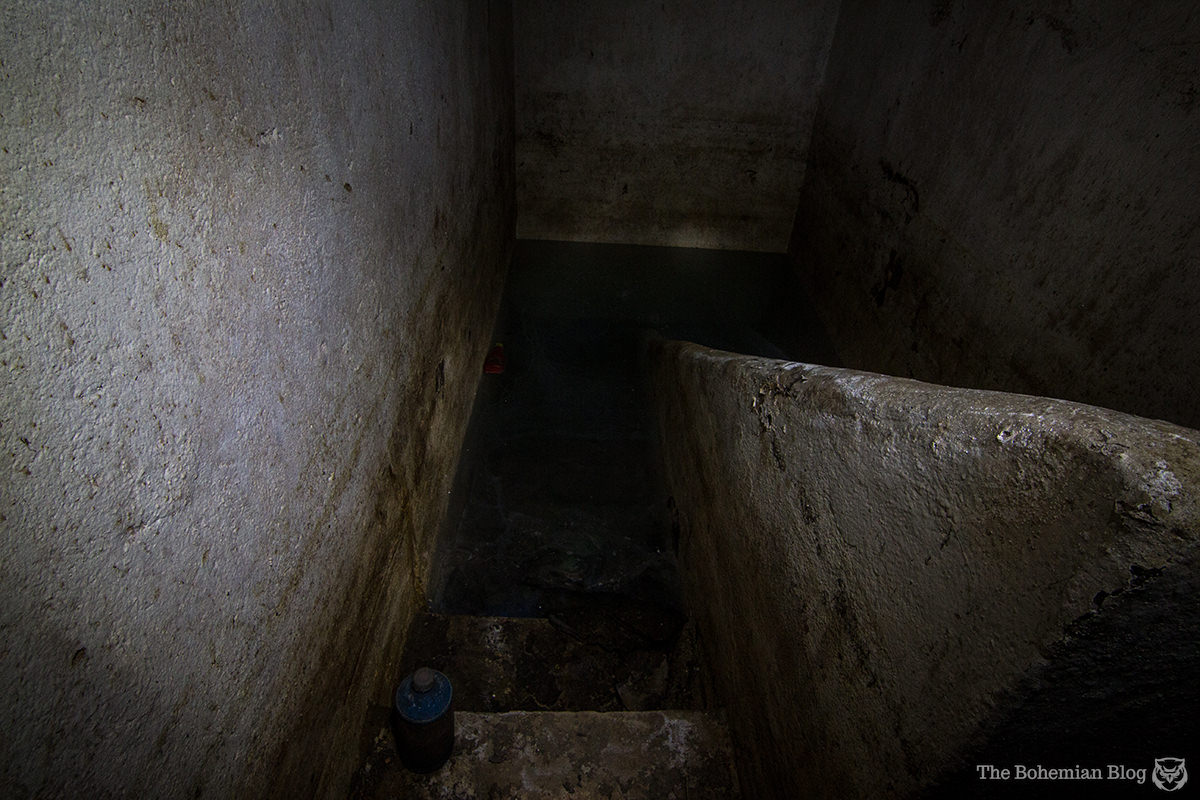
We were already two floors beneath the street, a sub-basement level, but at the end of the corridor a staircase had once led down further still. Now, it was flooded. Only the top few steps emerged from the scummy surface of the water. Still, grey and barely translucent, I could just about make out the remaining steps disappearing down to flooded depths beyond.
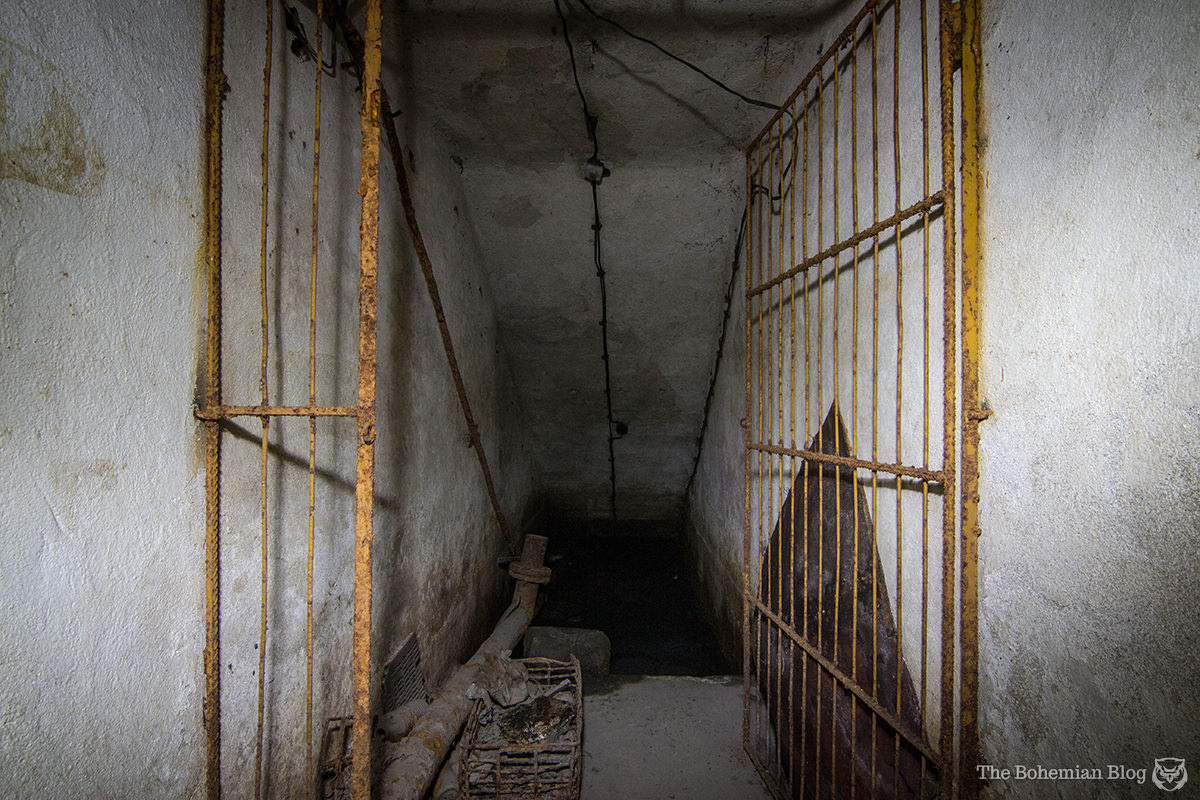
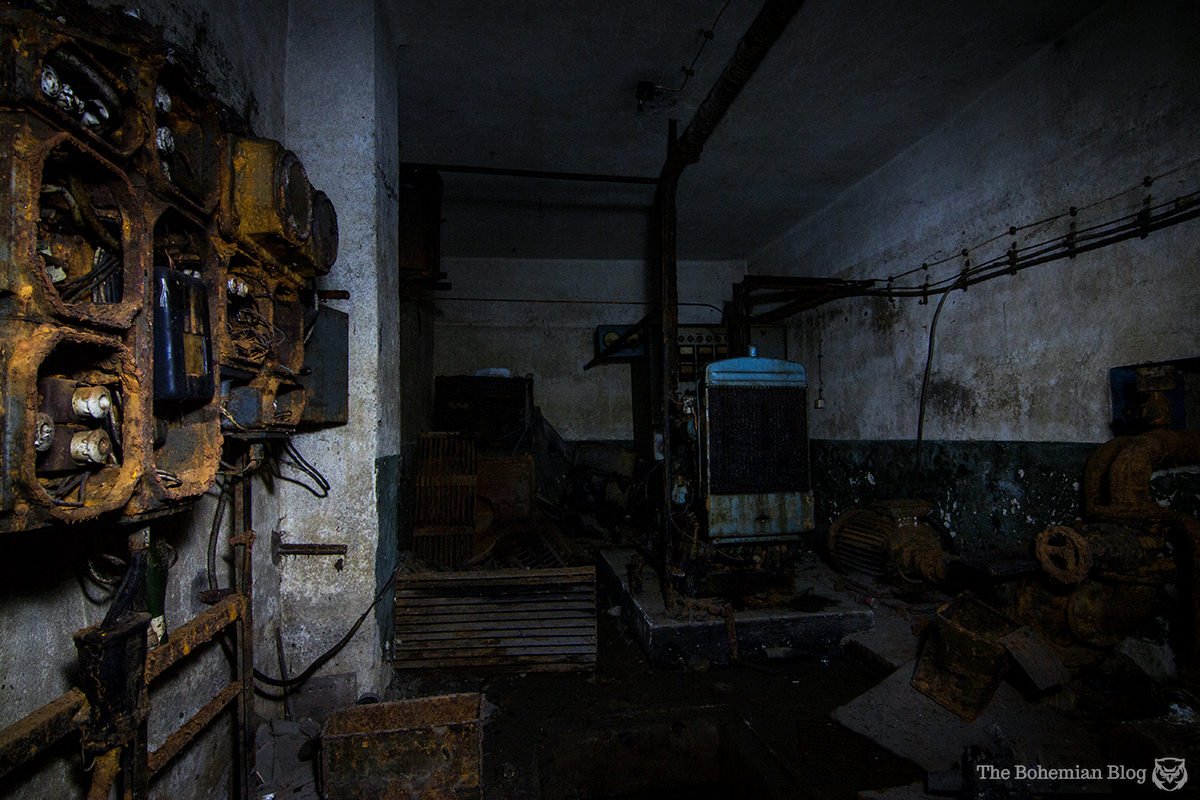
I had a look through some of the bulkhead doors. A boiler room lay behind the first, all rusted dials and machine parts crumbling away into red and orange dust. Much of the metal had disintegrated to flakes, making me wonder if the water level had been higher in the past.
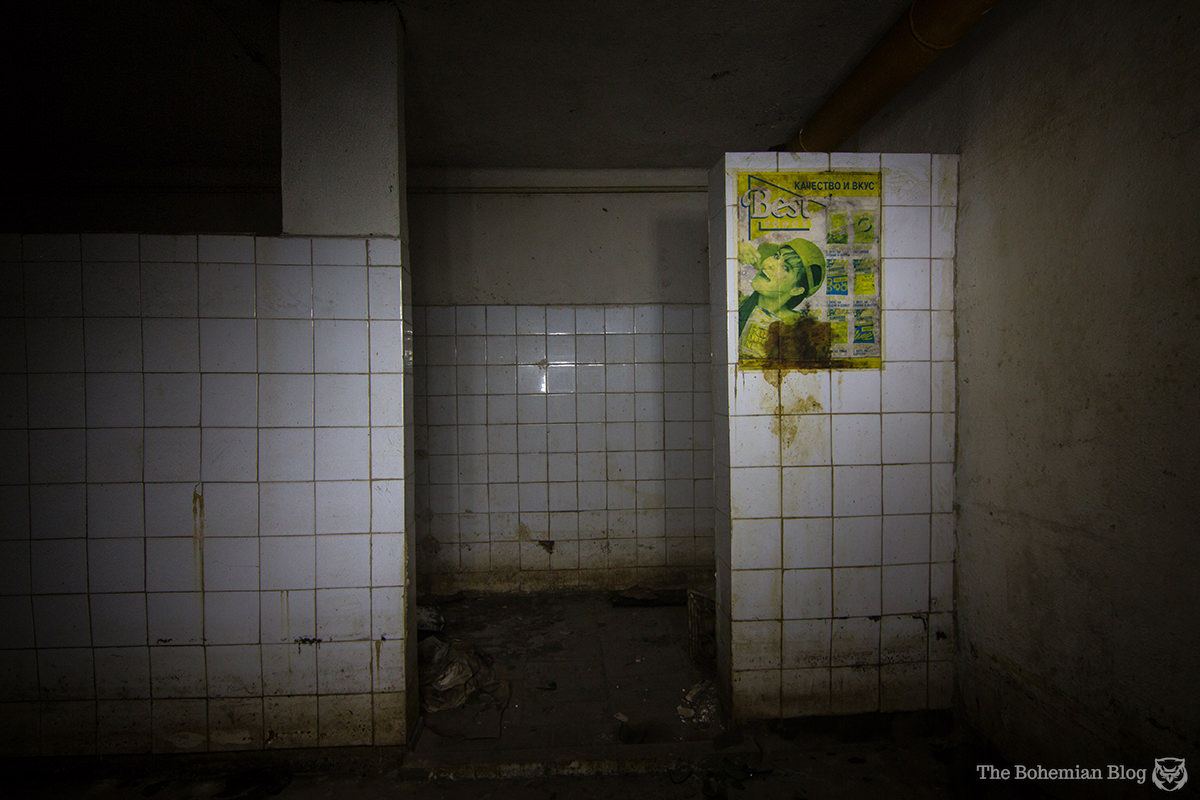
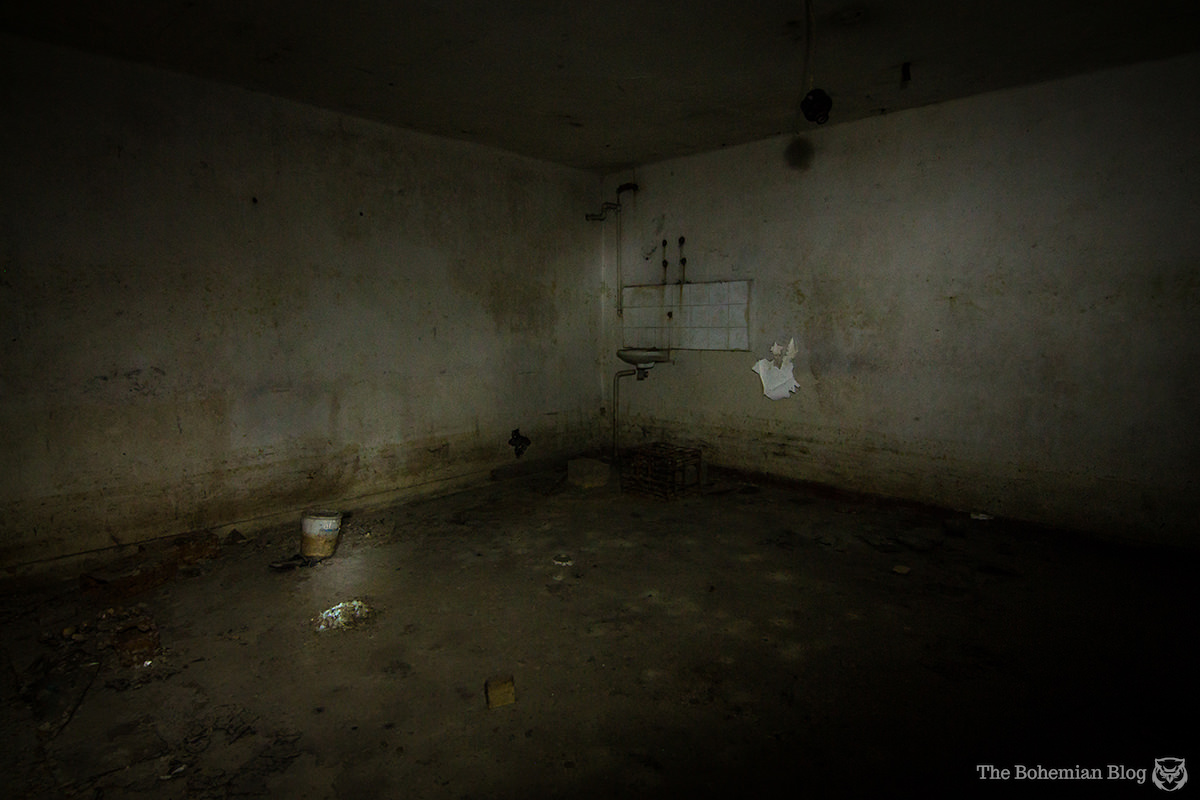
A second doorway took us through to the main area of the abandoned bomb shelter. Here was evidence that pointed to the former purpose of this place: wooden chairs, storage cases, and tiled spaces that could have been kitchens or bathrooms. There were occasional posters, too. An advert for some local snack food brand, and elsewhere, stuck across the metal of a bulkhead door, a laminated sign for Wrigley’s chewing gum.
“Original American Quality,” read the caption.
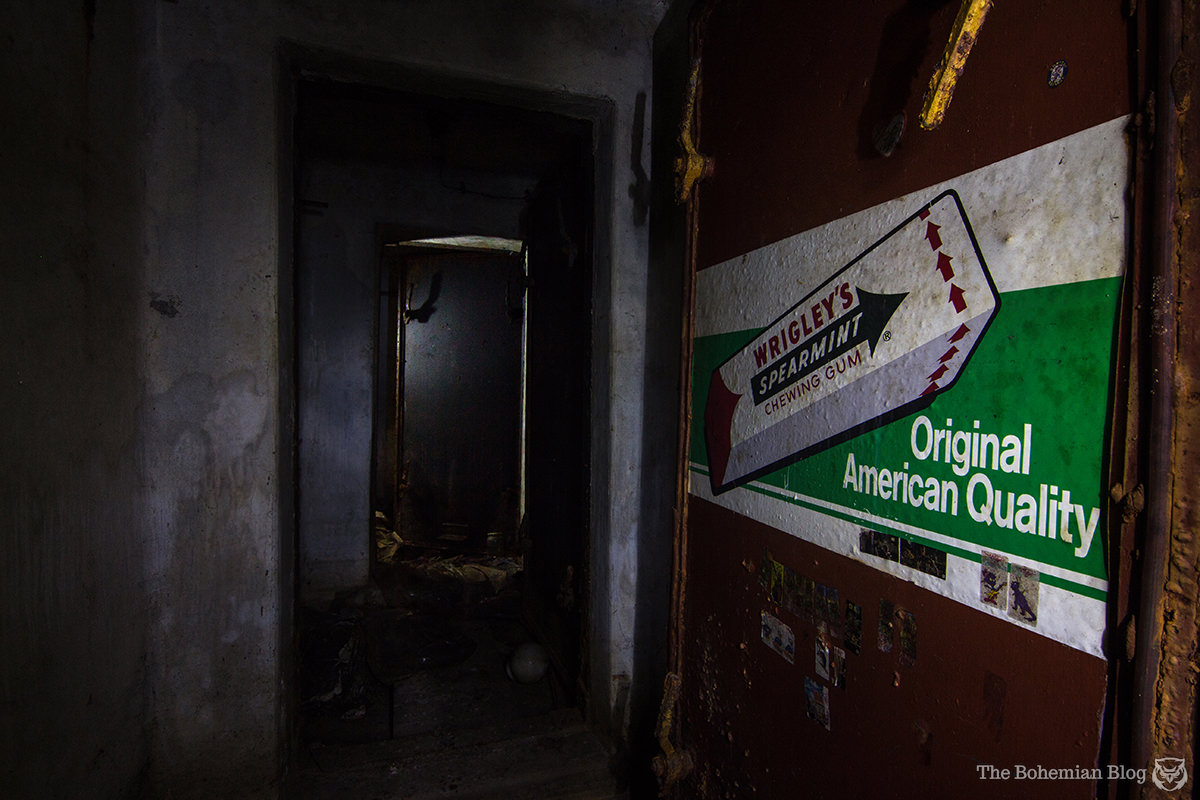
That sign must have been a later addition. The US and Allies dropped bombs on Bulgaria in 1943 and ’44, right after Bulgaria was pressured into allying itself with Nazi Germany. Bunkers like this were built, if not always in direct response, at least with a memory of those raids in mind. It wasn’t the kind of place I’d expect to find branding for US products.
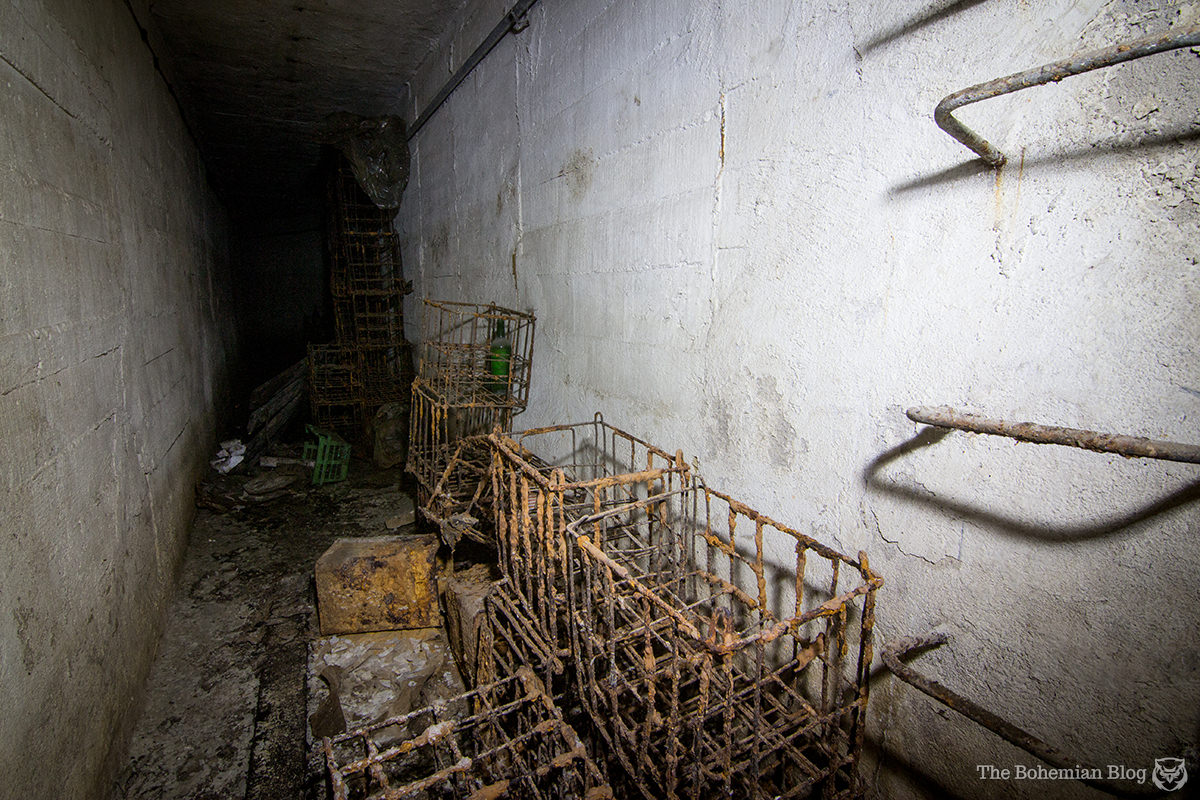
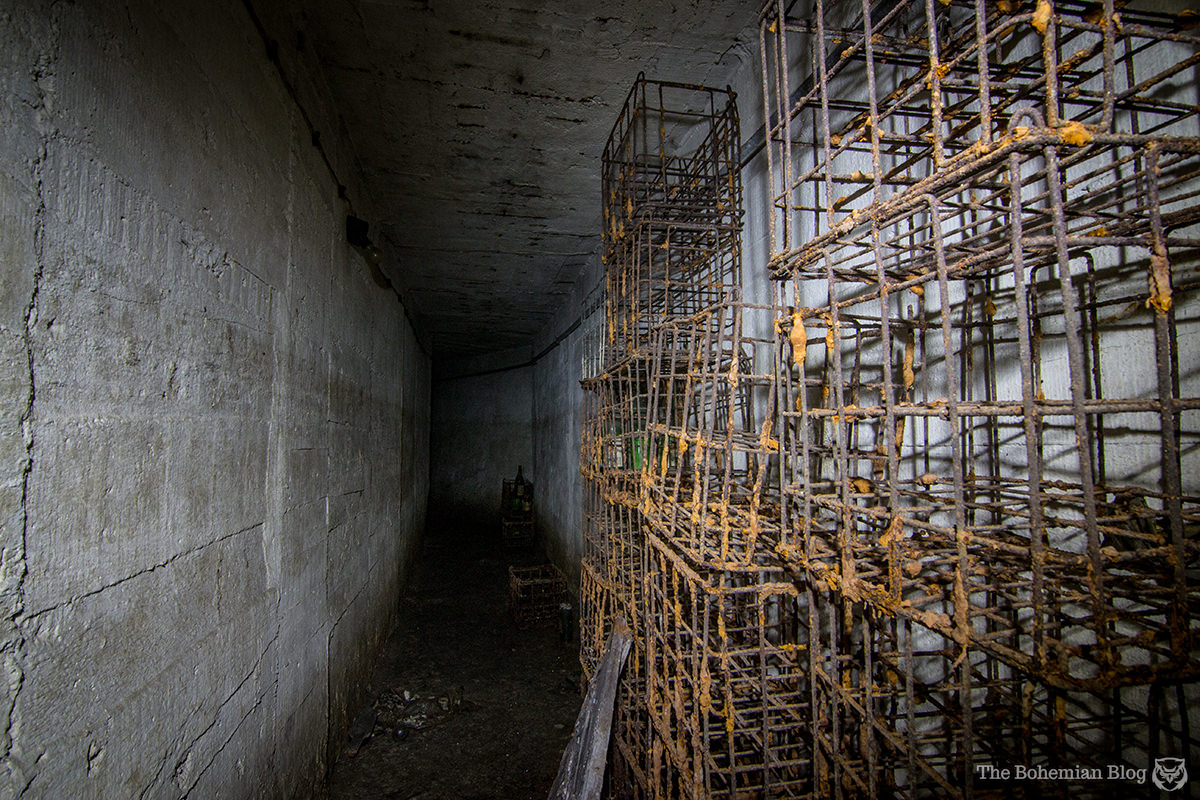
But other clues supported the idea that perhaps this abandoned bomb shelter had seen later uses. There were back rooms filled with delivery crates, posters for commercial products. A rear corridor that connected to another entrance (now sealed shut) was stacked with cases of empty wine bottles. Given the central location of the entry hatch, the shops that lined the wide boulevard up above, it was easy to imagine how a local business might have taken advantage of this space.
Back out near the entrance, I was photographing the boiler room when I first heard the birds. The bomb shelter had been silent throughout, unnaturally so, all but near the entry hatches where the occasional car would hum past on the road above. Now, that silence was drowned out by a squawking chorus that meant the sun was coming up.
Soon these streets would be busy again. It was time to leave.
We packed up our gear, and made our way back up the steps. The cars were more frequent now, crawling up and down the boulevard on either side of the hatch. We waited for silence, hearts beating fast in the darkness, then flipped the lid to let in a flood of blinding sunlight. Out we hopped, one after another, into the middle of the road.
There were a handful of pedestrians in sight, heads down as they walked. I think one looked round, briefly, in time to see us coming up out of the tarmac – but he made no comment, just quickly, quietly, drifted on by.
Within seconds we were gone, around the corner and out of sight. We left the abandoned bomb shelter just as it had been for all these years before: dusty, silent and dark, a little piece of Cold War history hidden in plain sight.



An illustrated guide to urban exploration in the Russian capital.

Poltergeists, ritual murder & a live-in succubus – the 1000-year-old pub with a ghostly reputation

A month-long monument hunt, and what I learned along the way.
COMMENT