MiGs, Stars & Magic Books: A Brief History of Trespassing in Moscow
An illustrated guide to urban exploration in the Russian capital.

Saturday 27 May 2017
There is a town in Bosnia & Herzegovina – Visoko, it’s called – where archaeologists claim to have discovered the relics of a civilisation dating back 34,000 years. If you haven’t already heard the story of the Bosnian Pyramids, then brace yourself: it’s a good one.
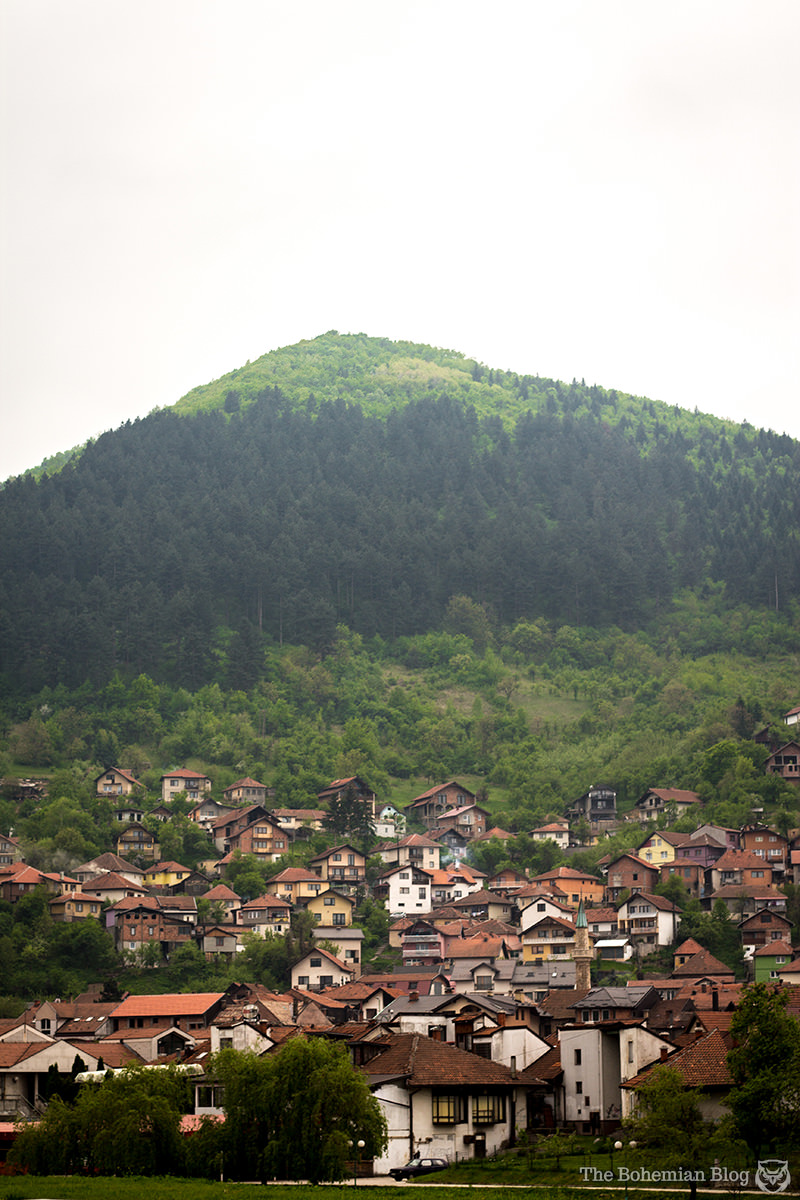 During the Middle Ages, Visoko was once the capital of Bosnia. Now it’s a fairly average backwater town, sat in the shadow of a peculiarly square-looking hill.
The town’s modern fame first emerged in 2006, when the businessman Semir Osmanagić release a book entitled Bosnian Valley of the Pyramids. During a visit to Visoko, Osmanagić noticed the geometric qualities of the hill – and his book made the claim that it was in fact manmade, an ancient stone structure buried beneath tens of thousands of years’ worth of soil and vegetation.
From there, the theory snowballed. Osmanagić began preaching the healing qualities of the structure, explaining how it lined up perfectly with the compass points and pondering what secrets might still lie buried inside. It was claimed that other hills in the valley hid a similar secret too – after the first discovery, the ‘Pyramid of the Sun,’ Osmanagić identified the ‘Pyramid of the Moon,’ as well as further pyramids of ‘Love,’ the ‘Earth’ and the ‘Bosnian Dragon.’ News spread, and soon there were archaeologists from around the world travelling to check out the Bosnian Pyramids for themselves.
It didn’t take long however, for the Bosnian Pyramid theories to be largely debunked. The European Association of Archaeologists called it a “cruel hoax.” Osmanagić countered that an international team of archaeologists had discovered irrefutable evidence to support his claims… though later, many of the researchers named would explain that they’d never once been to Visoko.
Nevertheless, the ‘Bosnian Indiana Jones’ – as his fans sometimes refer to him – has not been deterred by his critics. Semir Osmanagić has gone on to publish a number of further books on the subject, and his theories connect the Visoko pyramids to the ancient Illyrian culture. State funding, meanwhile, allows the project to keep growing: with the development of a visitor centre, and the provision of educational trips for school children who in some cases are taught the Bosnian pyramids story as an unquestioned fact of national history.
With all that in mind, I decided I had to go to Visoko and see these things for myself.
We drove to Visoko from Sarajevo, just an hour to the south.
If it weren’t for the pyramids, Visoko wouldn’t have a whole lot going for it. But the locals seem to have rallied around the idea – there are souvenir shops selling keychains and gemstones, paperweights shaped like pyramids and all kinds of new age healing trinkets.
The town features various locations linked to the Bosnian Pyramids theory. There’s an ancient burial ground (there’s nothing to see though, it’s still buried), there’s the visitor centre with its tunnels, and then there are the pyramids themselves. We wandered around the town for a while, had some lunch and soaked up the peculiar atmosphere… before making our way to the Pyramid of the Sun.

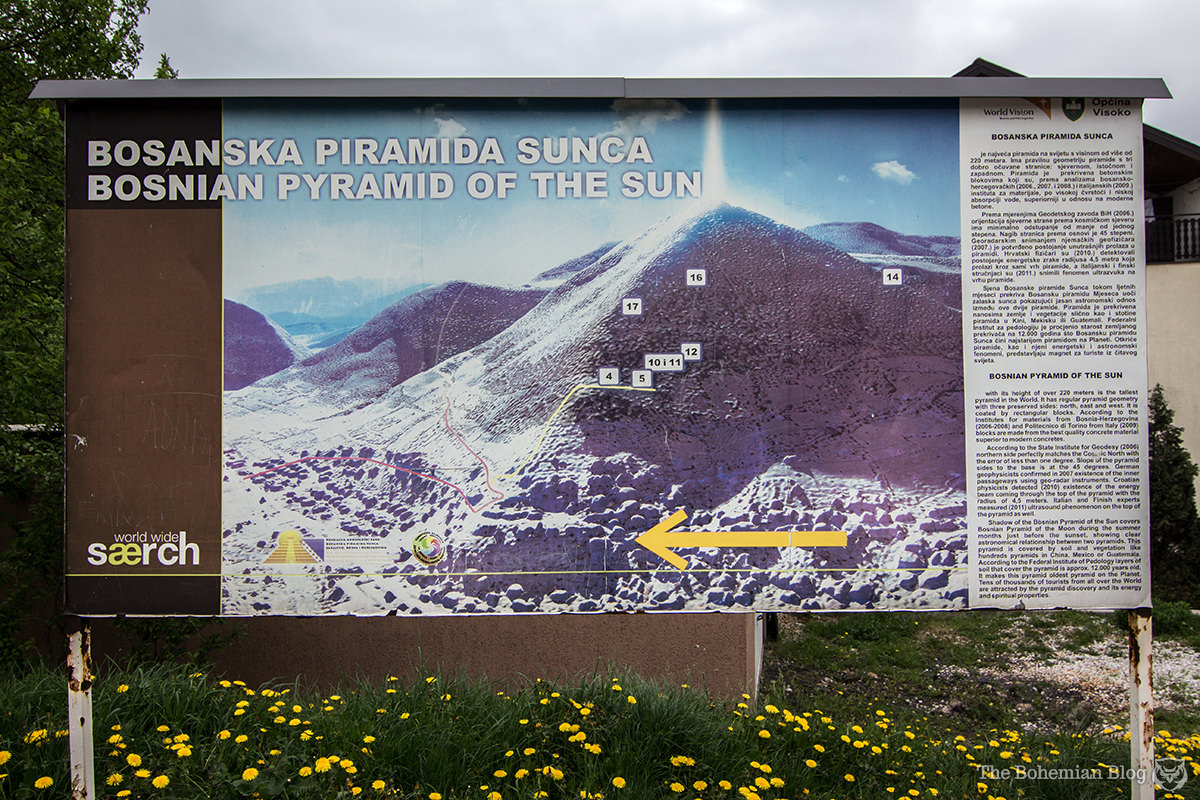

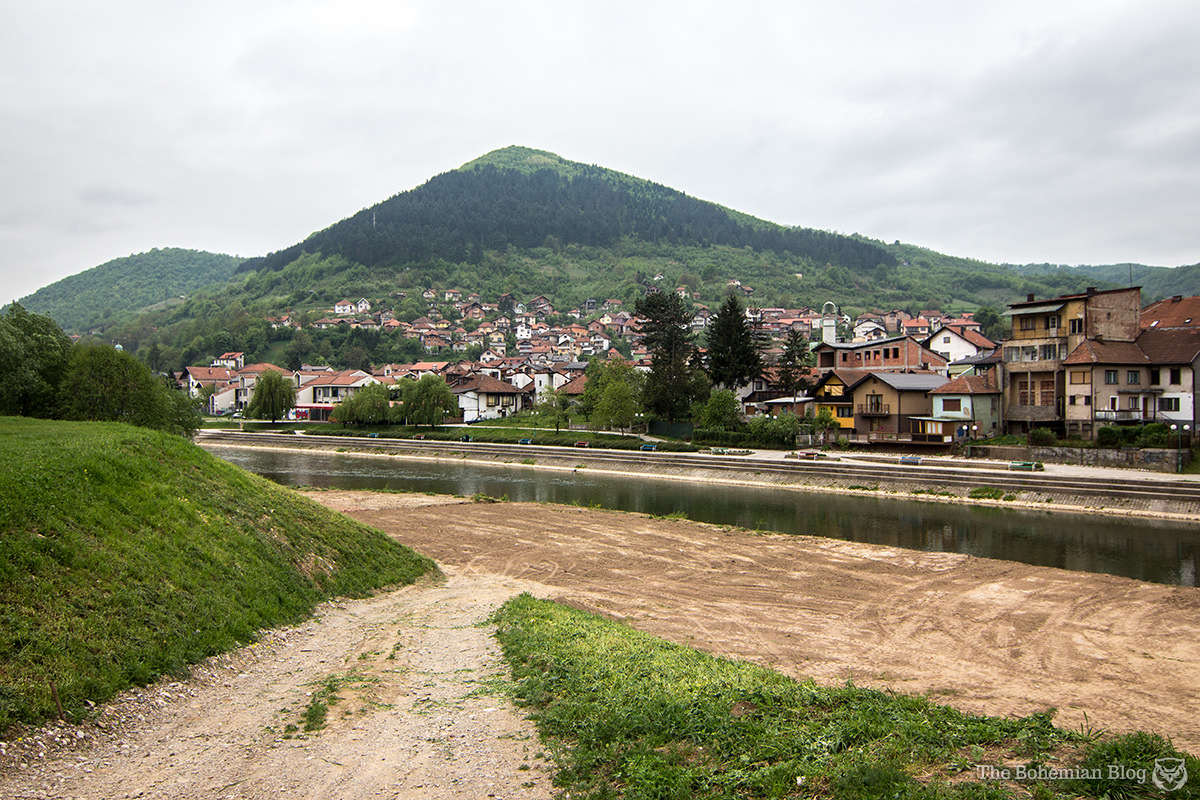
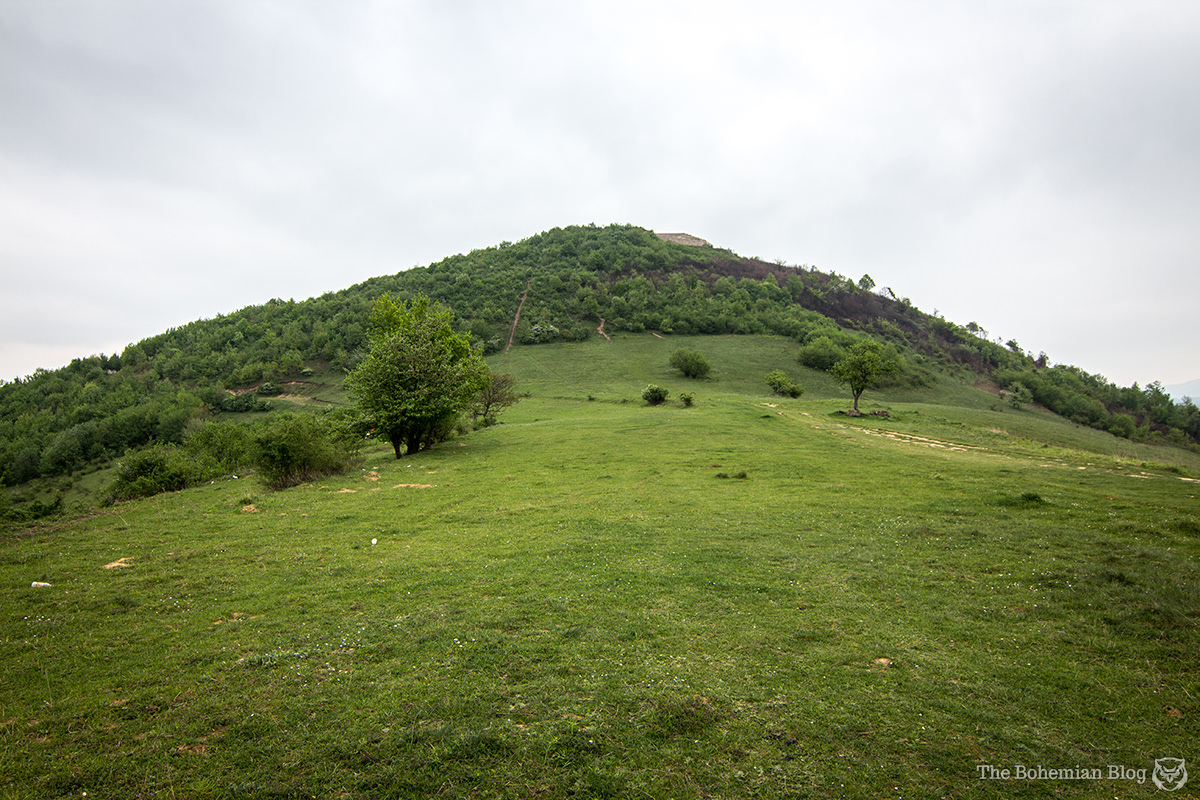
The largest of the Visoko hills is known as the ‘Pyramid of the Sun’… and it’s the crowning glory of Bosnia’s ‘Valley of the Pyramids.’ Granted, it is an unusually square-looking hill. Four sides are clearly distinguishable, though the rear of the rise, away from the town, is somewhat less defined.
That’s where we were heading – around the hill, past souvenir shops all the way up, to reach a final slope ascending from the rear up to the pyramid’s apex. The road stopped beside a pyramid-themed cafe, and we took the rest on foot.




Looking at maps of Visoko, I had found the location of the Bosnian Pyramids visitor centre… but it hadn’t been the first location they picked. The visitor centre advertises a system of tunnels, the discovery of ancient passages that lead deep inside the hill towards a suspected burial chamber at its centre. Digging deeper however, I found the details of a former site where another tunnel had once been ‘discovered.’
I couldn’t find much more than that; a vague mention or two of the older tunnels, and the name ‘KTK Visoko.’ Searching more, I linked the name to a factory site on the edge of town.
We didn’t have high expectations as we drove across the river, away from the Pyramid of the Sun, and towards an industrial-looking complex just beyond. The factory itself looked closed down. A security gate barred the entrance, though no one stopped us as we strolled discretely past. Beyond the abandoned warehouses though, we were in for a surprise.


It wasn’t until late afternoon that we finally found the main visitor centre. Located up a hill out of town, the place wasn’t actually that easy to find – and by the time we did, it was closed. A single Asian tourist drifted aimlessly from one boarded-up chalet to the next. Outside, laminated signs listed the various healing powers of the Bosnian Pyramids.


I’ll be honest with you: I had wanted to believe the stories about the Bosnian Pyramids. I travelled to Visoko with more than an open mind, rather, with an eager readiness to be convinced. I wanted to believe.
But my experience in Visoko pushed me to the other end of the spectrum. I saw so little in the way of actual evidence for anything… and in its place I observed nothing but rampant commercialisation. Semir Osmanagić and his team were too busy selling trinkets, souvenirs, building healing centres, to actually put the time into backing up any of their extraordinary claims.
Added to that, the relocation of the tunnels rang alarm bells for me. First they chose one set of mine shafts, and claimed: “this is definitely the entrance to the ancient catacombs.” Then these riverside tunnels flooded, the going got tough, and they quickly found another place to dig instead.
And I do mean dig, not excavate – although the site was closed when we visited, the road was almost blocked by heavy earthmoving equipment. Information at the new visitor centre explained that these tunnels, built some 34,000 years ago, had later been filled back in by another subsequent civilisation. So today’s pyramid hunters are re-digging the original tunnels according to… well, guesswork I suppose.
I went to the Bosnian Valley of the Pyramids, and I gave the Bosnian Pyramids theory more chances than it deserved. But in the end, I have to side with the European Association of Archaeologists… by concluding that the whole thing is nothing more than a money-grabbing hoax.




An illustrated guide to urban exploration in the Russian capital.

Poltergeists, ritual murder & a live-in succubus – the 1000-year-old pub with a ghostly reputation

A month-long monument hunt, and what I learned along the way.
COMMENT