MiGs, Stars & Magic Books: A Brief History of Trespassing in Moscow
An illustrated guide to urban exploration in the Russian capital.
Saturday 29 February 2020
Hello, friends.
It has been almost a year since I published a blog post. You would be forgiven for assuming I had given up on this site! That isn’t the case, though. I talked about being overly busy in some of my more recent Patreon posts, and this situation gradually got worse, until I ended up being hospitalised in December.
Back on my feet now, I am looking at ways to make the future more manageable and fun. I want to talk here about my plans for this blog as we enter the 2020s, but to add context, I also want to talk a little about the road leading up to this point so far.
Better get the kettle on – this could be a long one.
———
I relocated to Bulgaria at the end of 2011. It was winter, the beach bars were closed, and I took great pleasure in exploring the empty coastline over the following months – from rocky cliffs to boarded-up resorts, and even finding my way into a bomb shelter or three. The beaches were empty aside from the occasional dog walker. Mostly I was alone with the seagulls, and the sand had a satisfyingly icy crunch beneath my feet. When spring came, a Bulgarian friend offered to take me to the beach. In her car on the coastal road out of town, my gaze turned momentarily inland where I was struck by the sight of a huge concrete form perched on a hill, an abstract monstrosity framed against the sky and towering over the city suburbs.
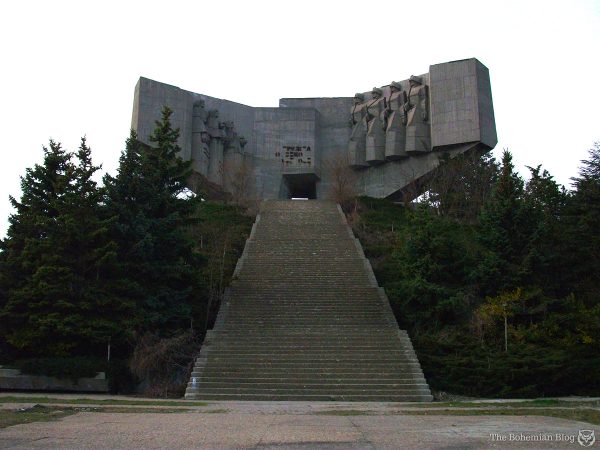
This otherworldly object, with its two ‘wings’ that appeared to fold out, around and forward, instantly made me think of the derelict craft from Ridley Scott’s Alien. I was stunned. It was like nothing I had ever seen. “What’s… that?” I asked my friend, and she said:
“Just some old Russian shit. It’s not interesting.” I asked more questions, but she shrugged them off with a hint of frustration just beginning to show. She advised me to stay away from the place – citing “wild dogs,” “drug addicts,” and all the rest.
The next day I walked back there alone. There was something so very enticing about the monument, it felt crude and abrasive, lop-sided yet perfect; its shape, its smooth concrete planes folding into one another at unexpected angles, was inexplicably powerful. I only went up there to get a closer look, so I was pleasantly surprised to find the structure was accessible, and actually contained a whole network of different rooms, passages and stairwells inside, even descending beneath the monument, into the hill itself. Back then, I had already started this blog. I set the site up over Christmas 2011, as a way to share updates with friends back home. So far, I had posted about sci-fi literature and tv shows, about psychology, and just a few bits and pieces about what I had seen so far in Bulgaria. I was getting maybe 15 visitors on the site per day, and most of them were people I knew. But when I uploaded my blurry photos from inside and under that socialist monument, I was inundated with something like 18,000 hits over several days. Apparently, I wasn’t the only person out there who found this “old Russian shit” interesting.
Of course I didn’t realise it at the time, but that moment – when I first laid eyes on the Monument to the Bulgarian-Soviet Friendship, and felt a powerful mix of emotions that I didn’t yet have the words to explain – would prove to be a life-changing event. Because over the coming years, I would dedicate myself to learning those words. I read voraciously and visited hundreds more Socialist-modernist monuments, travelling all over Bulgaria to find them, and then venturing further afield to find more in the republics of Former Yugoslavia, in the Former Soviet Union, and even as far away as North Korea. I bought a proper camera, and taught myself how to use it with Youtube tutorials.
When friends from back home visited me, I would plan long road trips for them, sharing as many of my discoveries as I could fit in along the way. In 2014, one of those friends told me I should advertise the route online, and sell it as a tour. The thought of that terrified me at first (I would always prefer to write, alone, than speak to a roomful of strangers), but I gave it a go.
My first tour, visiting Bulgarian monuments in September 2015, sold out so fast that I added a second departure in October. The October tour promptly sold out too. It’s a good thing I planned that second one, or I might not still be doing them today; because that very first tour was difficult. Even now, several dozen tours later, I still list two members of that first group amongst the most difficult guests I’ve ever had. By that point though, it felt too late to cancel the October trip, so I persevered – and in October I met one of the friendliest, most memorable groups I would ever lead. As the years went on that October group would prove closer to the norm, while the difficulties of September were soon revealed to have been an unfortunate outlier. Running tours is a lot of work, but I found I usually really enjoyed the experience; so I started offering more tours, and in more different countries.

In 2015 I began working towards a PhD researching the growth of tourism to sites of socialist heritage in Eastern Europe. Essentially, I was looking at how these monuments had changed from being places of national pride, to slipping into abandonment and decay. I was interested in what it meant for a society when your places of taboo attract more foreign tourists than your most cherished treasures do, and what kind of mental and cultural gymnastics a country must go through, in order to begin making the best of the hand they were dealt – by capitalising on this interest in ‘difficult’ or ‘unwanted’ heritage, for the benefit of local communities. In the case of Bulgaria, by now my adopted home, the foreign interest was clearly there (the success of my tours was proof enough of that), but I wanted to learn how this interest could be managed in a way that actually benefitted local people.
Eight years after I arrived in Bulgaria, in 2019, I led nine tours (the shortest at one week, the longest two), between them visiting Bulgaria, Ukraine, Moldova (and Transnistria, if you count it), Serbia, Croatia, Bosnia & Herzegovina… and, in an unexpected twist, Canada too. I also helped test a friend’s new tour route in Greece, and I laid the groundwork for adding more destinations to my roster in 2020: Kazakhstan, Uzbekistan, Tajikistan and Kyrgyzstan, Estonia, Latvia and Lithuania. When I mentioned to a friend back in Britain that I’d taken 36 flights in a year, his answer was “lucky you.” But facilitating other people’s holidays is not the same as being on holiday yourself, and I was beginning to feel strained, as if I had spread myself too thin. Leading that many tours, I was also suddenly handling quite a lot of money – which necessitated registering a company, figuring out my tax liabilities in Britain and Bulgaria, as well as researching tourism law in half a dozen different countries. The details are painfully boring, but I’ll simply say that the paperwork associated with running these tours gave me more than a few sleepless nights in 2019.
In spring 2019 I signed a publishing deal for a book about Chernobyl. Just in the course of running tours, I had been there more than a dozen times already – I was starting to know quite a lot about the place – and around that same time the HBO Chernobyl miniseries pushed global interest in the subject to fever pitch. There are plenty of good books already about the 1986 disaster, but many of the things I’ve learned about contemporary Chernobyl have never been printed anywhere before. Various people warned me that committing to the book, on top of everything else, would be too much; on the other hand though, the timing was perfect and if I didn’t write this book now, I knew that somebody else might try something similar soon. I made another seven trips into the Exclusion Zone that year, and interviewed dozens of people who’d had first-hand experience of the disaster and its aftermath.
The second half of 2019 was a blur. I didn’t sleep much, and I spent most of my waking time in a cloud of stress as my mind ceaselessly shuffled through a long list of urgent deadlines. I ate junk food at random intervals, and I was drinking quite a lot too – not drinking to get drunk, but rather a low-key almost daily habit that never quite felt excessive at the time. That’s one of the dangers with tourism work: you can easily end up spending several months of your year eating and drinking the same way that normal people do for just two weeks per year.
When winter arrived I travelled back home to write up all my research into a book… and that’s when my health gave out.
———
On New Years Eve, as 2019 rolled into 2020, fireworks went off across the city and at midnight I was woken by a commotion of nurses at the foot of my bed.
After several days in a communal ward, which I had shared with a pair of recovering alcoholics who both smelt worse than death (to the point that I was sleeping with a surgical mask over my face), I had paid to upgrade to a single room in the hospital. My room had maybe the best view of the fireworks, and the staff on duty that night woke me as they pushed around my bed to get to the window. Sitting up slowly on the pillow, my left arm aching from the bruise that had developed around the intravenous plug stuck into the vein just beneath the corner of my elbow, I managed to say a hoarse Chestita nova godina (Happy new year) to my visitors. The first just grunted in acknowledgement. Another mumbled the same phrase back to me, but without turning away from the view. And so began my new decade.
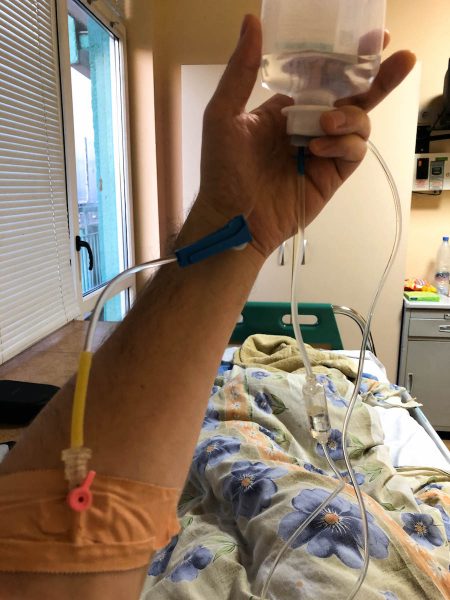
I spent a week in that hospital bed, with the tube in my arm. I had colour-coded pills to take, and three times a day a nurse would come to administer intravenous antibiotics that made me feel sick and dizzy. According to the doctors, my condition had likely been caused by some combination of bad diet, stress, and insufficient sleep. It’s a fair cop, as they say.
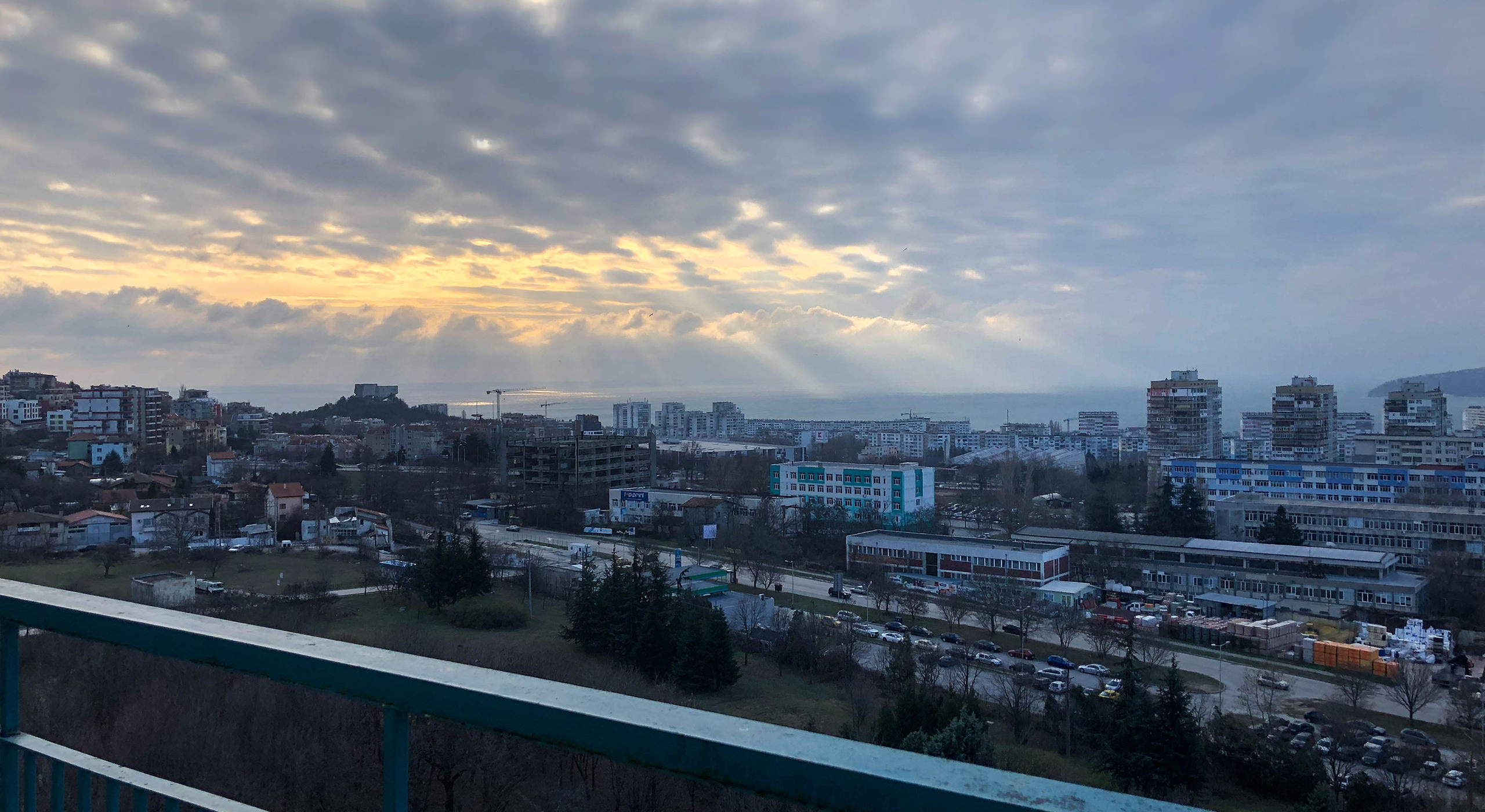
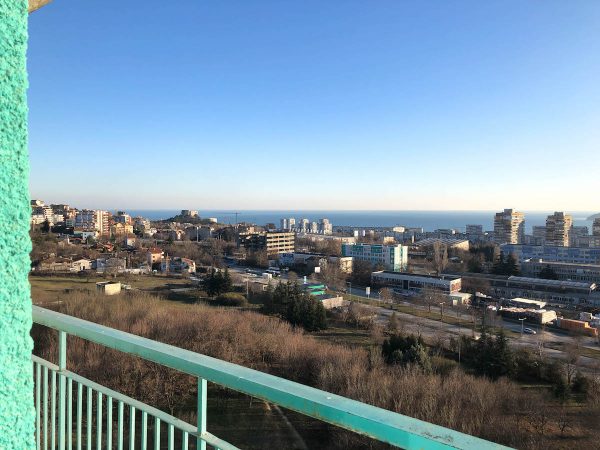
From my bedside window, one object dominated the view: the Monument to the Bulgarian-Soviet Friendship. The hospital is located behind the monument, which symbolically faces Russia (meaning the sea gets the best view while the city has to gaze up at its arse). Every day for a week I would be woken for my 6 am injection, then lie there afterwards feeling nauseous while the sun rose over the Black Sea, illuminating the monument. Back in the early 2010s I had stood at the foot of that same ceremonial hill, looking up at the front of the monument, without knowing it was about to lead me down a rabbit hole that would take over my whole life. Now, at the other end of the decade, that obsession had put me into a hospital bed where I could do nothing but gaze on the same monument from behind. It was strangely poetic.
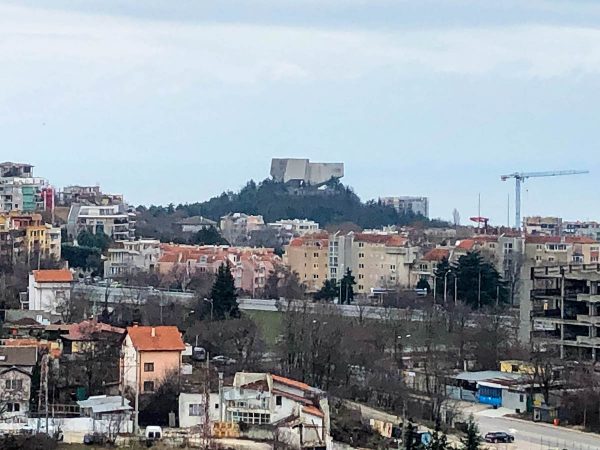
I don’t want to dwell on that fairly depressing week. Neither do I mean to make it sound worse, or lonelier, than it was – my girlfriend, a Bulgarian herself, visited me every day with pots of home-cooked soup, as well as helping me to understand the innumerable forms the doctors wanted me to sign. I got through it, and being stuck in that hospital bed also gave me a lot of time to think. The result is that I’ve decided to make some changes.
———
I am an obsessive person by nature. In many ways, that trait has served me well – but going forwards, I need my lifestyle to be sustainable. Booking and leading up to 10 tours a year in almost as many different countries, and writing multiple hefty manuscripts at once, while skipping sleep and consuming a diet composed 80% of meat and beer, is not the way.
Here are some changes I have already started to make.
> The simple but important things: I found a fantastic accountant, who now takes a lot of the number-work off my hands. I’m sleeping more, and eating better.
> In case you hadn’t noticed, I kind of hate social media (Twitter is the only one I regularly look at these days). So I now have someone running my Facebook page and Instagram account for me, sharing interesting photos even when I don’t have the mental capacity to create more personal content myself.
> For the first time ever, in January, I had to miss one of my own tours. As it turns out though, the friends I work with on those Ukraine trips managed just fine without me. Glowing reviews all round. Running a “tour business” never appealed to me – rather, I got into this because I’m passionate about the places we visit, and I love watching that same passion begin to take hold of people who are seeing them for the very first time. However, I’m realising that it isn’t a terrible idea to have people on stand-by who could run these trips without me sometimes.
> The Chernobyl book is finished, and now we’re editing it. And I’m really happy with it! If you’ll pardon the immodesty, I actually think it’s going to be extremely good.
> My PhD is due to finish this year too. Over the past few years I have become increasingly connected to my case study sites, to the point that I’ve been losing sleep over the actions or inactions of local government officials, culture ministries and preservation foundations. This is silly. However as I enter the home straight, writing up this thesis feels a little like putting the lid back on that box. I could just walk away after that, if I wanted to, and stop thinking about the subject altogether. Otherwise, whatever relationship I choose to keep with these projects in future will be set on my own terms.
Finally, that brings me to Ex Utopia.
I love this website. I am deeply proud of the body of work I have created here over the years, and I cherish many of the connections I have made in the process. However I have also turned it into something I occasionally dread. It got to the point where I was posting 8,000-word essays that each took a month to research and write. Finding Patreon has been a blessing, but at the same time, the more sponsors I had the more I felt that each post needed to be better than the last. In the end I just didn’t post anything for most of a year, because I couldn’t find time to create something I felt was sufficiently worthy.
Obviously this attitude isn’t doing any of us any good! I’ve got so many stories I’ve never shared, and literally hundreds of gigabytes of photographs that I haven’t even looked at yet myself. I’m not sure if I even mentioned my recent trips to Iran, Greece, Portugal, France or the Baltics on here. So here’s my plan: I’m just going to post whatever I feel like in future. Some posts will be long, and others will be short. I am looking at getting help too, having someone else sort my photos or take on research tasks – but this blog has always been a personal project for me, so the words you read will still be mine. There will always be some articles and galleries that I want to reserve for my supporters, and for those people I’ve previously promised postcards to: I’m sending a batch this week.
I really won’t be offended if anyone wants to downsize or end their sponsorship as a result of these changes. I remain enormously grateful for any gesture of support, for however long it is/was offered. But I used to celebrate every time I saw a new supporter in my inbox, while recently it has mostly just made me feel guilty. It is time to change my approach and make this fun again.
———
If you read all of this, well, thank you for sticking with it. I think it has been helpful for me to put it into words. And if you didn’t read it all, that’s fine too – here’s a summary:
> The 2010s were exciting and hectic for me. I achieved a lot, but it also made me ill.
> I am now sitting on a ridiculous mountain of unpublished content. If my last decade was defined by non-stop travel and information gathering, I want the next to involve a lot more resting, reflection and sharing.
> My blog posts will often be shorter in future. I’ll also get some help, behind the scenes. But if the result is frequent short posts instead of mammoth essays that seldom actually arrive… then we’re probably all going to be happier.
Thank you all for your extraordinary patience and support – and here’s to a wonderful new decade for us all.
– Darmon.



An illustrated guide to urban exploration in the Russian capital.

Poltergeists, ritual murder & a live-in succubus – the 1000-year-old pub with a ghostly reputation

A month-long monument hunt, and what I learned along the way.
COMMENT